What If My Winter Was Not a Delay?
Journey 003 · Feeling Behind in Life · Part 4 of 5
Winter came quietly that year.
Not all at once.
First, the mornings grew darker. Then the air near the window turned cold. And then, one by one, the leaves on my plant began to change.
A yellow leaf here.
A dry edge there.
A stem leaning a little more than before.
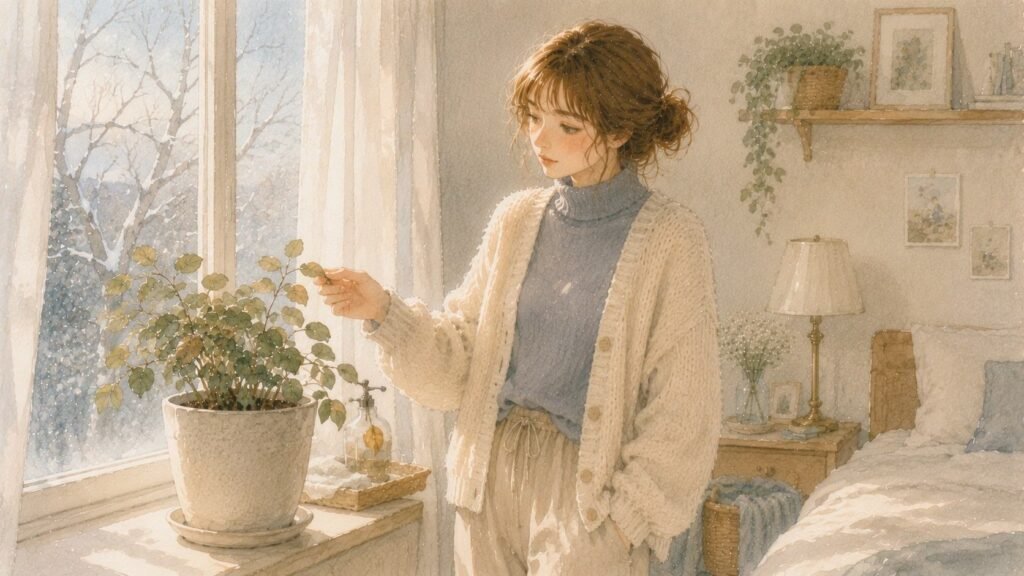
At first, I told myself it was normal.
Still, every morning, I checked the plant with a small tightness in my chest.
I touched the soil.
Moved the pot farther from the cold glass.
Turned it toward the light.
I tried to do everything right.
But the plant kept losing leaves.
One afternoon, I found three of them lying on the windowsill.
They were curled and thin, like small pieces of something that had given up.

I picked them up carefully.
For a moment, I felt embarrassed, as if I had failed the plant.
Perhaps it had not simply been late.
Perhaps it was dying.
I sat beside the window and looked at it.
It seemed smaller now.
Less full.
Less alive.
Less like the plant I had imagined it would become.
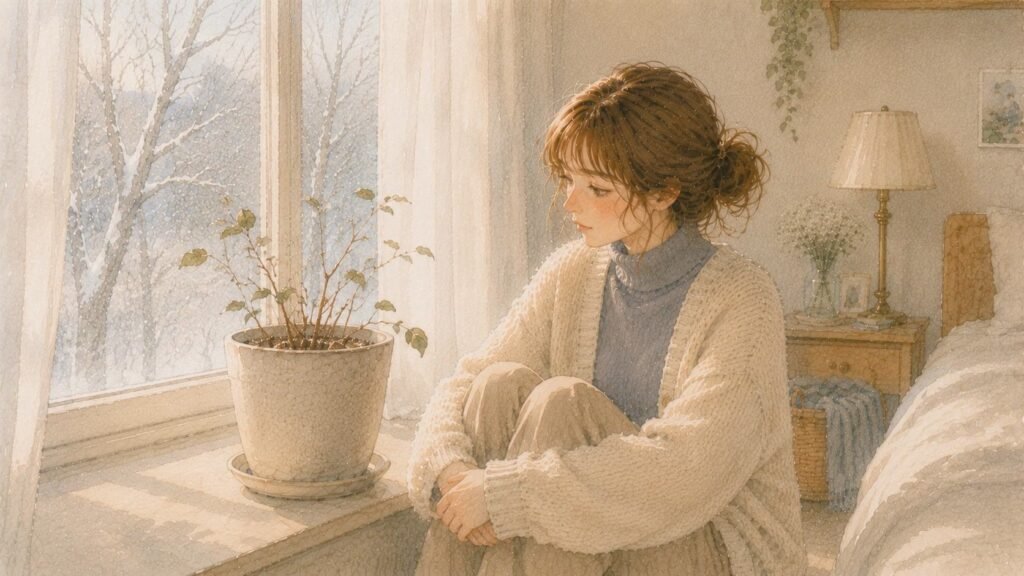
There were still a few green leaves, but the empty spaces between them felt impossible not to notice.
I thought about the seasons in my own life when I had looked like that.
Smaller than before.
Less certain.
Less impressive.
Less easy to explain.
A relationship ended, and people called it starting over.
A job exhausted me until leaving looked like giving up.
A plan I once believed in became impossible to continue.
A version of myself I had worked hard to build no longer fit.
From the outside, it looked as if I were moving backward.
Less stable.
Less productive.
Less successful.
Less clear.
But from the inside, it had never been that simple.
Sometimes I was not going backward.
I was letting go of what could no longer keep me alive.
The world understands blooming.
It understands announcements, achievements, and progress that moves visibly upward.
It knows how to celebrate a new beginning when that beginning looks exciting.
But it does not always understand winter.
It does not always know how to honor the season after something ends—when getting out of bed takes more courage than making another plan, when survival is quiet, and when returning to yourself looks like disappearing from everyone else.
So I called those seasons delays.
I called them wasted time.
I called them falling behind.
I judged the months when I had rested, grieved, recovered, or changed direction because they did not look like growth.
But perhaps I had misunderstood winter.
That evening, I searched for what to do when a plant loses leaves in the cold.
I expected a warning.
Too much water.
Too little sunlight.
The wrong temperature.
A sign of disease.
Instead, I read:
Some plants slow down in winter.
Some shed leaves.
Some enter dormancy.
They may look inactive, but they are not dead.
They are conserving energy.

I read the sentence again.
They may look inactive, but they are not dead.
The room was dim when I looked up from the screen.
The plant sat quietly on the windowsill, thinner than before, but still there.
Still alive.
Still holding on.
How many times had I mistaken my own dormancy for failure?
How often had I hated myself for needing less noise, less striving, and less proof?
How many times had I tried to force myself to bloom when I barely had enough warmth to survive?
There were winters in my life I had never called winter.
I called them laziness.
Weakness.
Lost momentum.
Wasted potential.
But perhaps they had been seasons of protection.
The months after something ended.
The weeks when I stopped explaining, stopped posting, and stopped trying to appear okay.
The days when success felt far away, but making it through the day was already a form of courage.
Those seasons had not made me impressive.
But they may have kept me from breaking completely.
A plant in winter does not apologize for not blooming.
It does not force itself open just to prove that it is alive.
It slows down.
It holds its energy close.
It waits without performing growth.
I wondered what it would be like to offer myself the same permission.
Instead of asking:
Why am I not doing more?
I opened my notebook and wrote:
What season am I actually in?

Then underneath:
What am I trying to force?
What is asking to be released?
What still needs protection?
I did not have perfect answers.
But the questions felt kinder than another demand to hurry.
Perhaps I did not need more discipline.
Perhaps I needed recovery.
Perhaps the work of this season was not becoming more.
It was protecting what was still alive.
The next morning, I reached for the watering can, then stopped.
I touched the soil.
It was still damp.
So I left the plant alone.
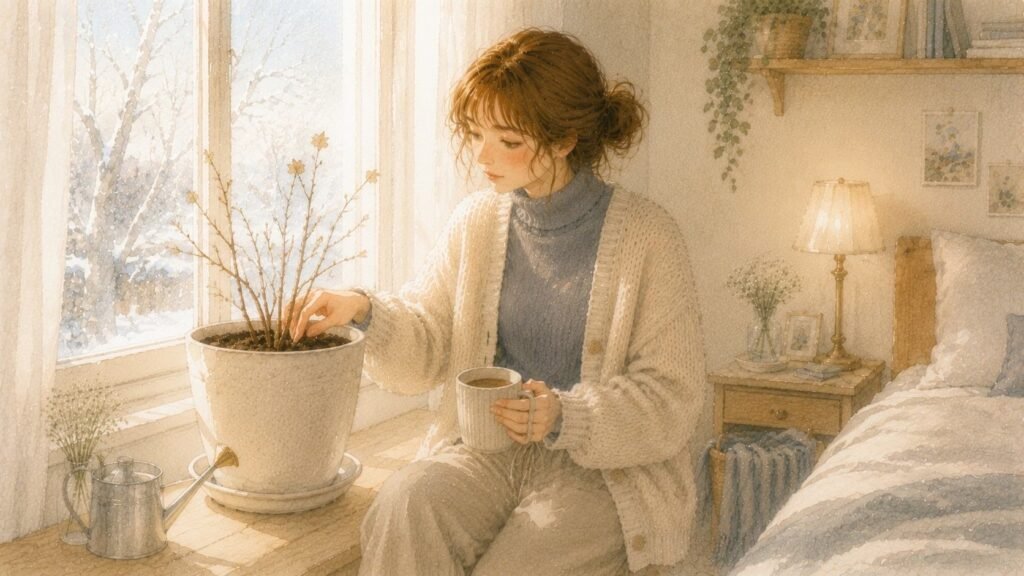
That felt strangely difficult.
I was used to doing something.
Fixing.
Checking.
Improving.
Proving.
But this time, care looked like restraint.
Care looked like not forcing.
Care looked like trusting that quiet did not mean nothing was happening.
I moved the plant closer to the softest light and sat beside it with my coffee.
Outside, the sky was pale and cold.
There were no flowers.
No new leaves.
No visible sign that anything was getting better.
And yet, the plant no longer looked like a failure.
It looked like a life in winter.
A life that knew when to pause.
A life that understood there are seasons when survival is the work.
That night, I found another fallen leaf.
I held it in my palm for a moment.
It was dry and delicate.
A small letting go.
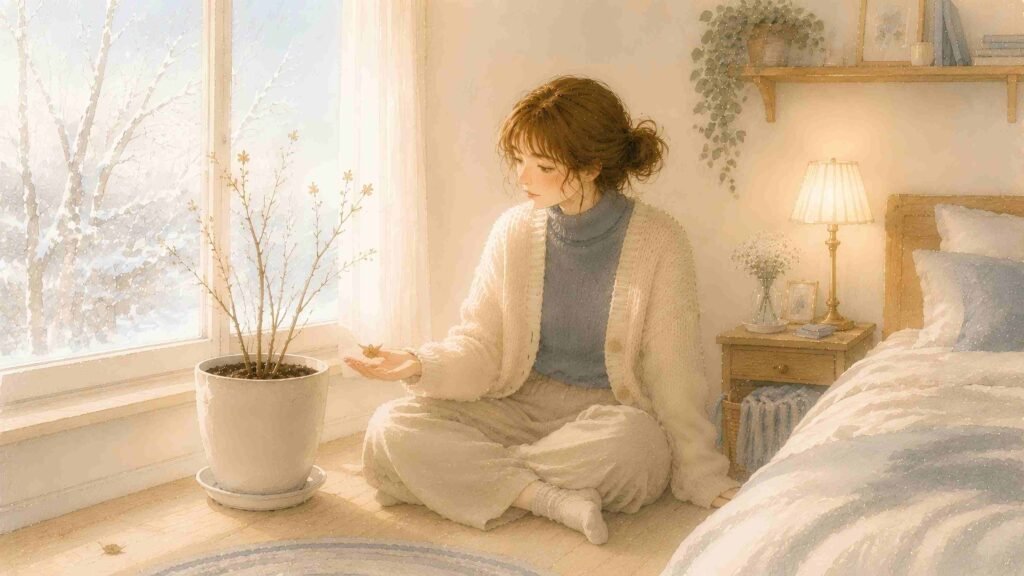
Not beautiful in the way a flower is beautiful, but still part of the plant’s life.
Still part of the season.
This time, I did not panic.
I placed it gently in the trash and looked back at the plant.
It was quieter now.
More bare.
Less impressive.
But I no longer saw only loss.
I saw a life conserving what it needed for whatever came next.
I still wanted spring.
Of course I did.
I wanted warmth, color, and some sign that something beautiful could return.
But for the first time, I did not hate winter for not being spring.
I sat beside the window and let the quiet be quiet.
And somewhere inside me, a softer understanding began to form:
I am not late because I am resting.
I am not failing because I am changing.
I am not behind because this season looks bare.
Some seasons do not bloom.
They protect.
They release.
They gather strength.
They keep us alive.
When spring finally began to return, I almost missed it.
Continue this journey
This is Part 4 of 5.
← Back to Part 3 Continue to Part 5 →